
Mercedes-Benz is one of the most respected and recognised premium brands in the car industry. With a reputation for excellence and a high-quality finish being established over decades, Mercedes-Benz holds a core place in the world of motoring and today it continues to produce some of the most high-end models.
But how did that reputation come to be and what is the current state of Mercedes and its cars? In this article, we’re going to be looking at this German brand in further detail while checking out some of the Mercedes vehicles currently available via our website. Contact our expert team to learn more.
A Short History of Mercedes Benz
While Ford might have been in the spotlight for the first mass-production vehicle with its Model T, it was Mercedes that developed the very first automobile with its Patent Motor Car from the late 1880s. Early on, Mercedes was at the forefront of innovation.
Naturally, the post-First World War period proved difficult for Mercedes - as it did so many manufacturers - though with Daimler-Benz being created in 1926 it did better than most. By 1928, Daimler-Benz had four core models. During the Second World War, Daimler-Benz focused primarily on heavy-duty trucks to aid the war effort. Despite difficult conditions after the conflict ended, Daimler-Benz managed to start creating its trucks once again.
Switch forward to the 1960s and Daimler-Benz’s prowess continues. Even an oil crisis does little to disrupt the brand’s growth, with cars like the S-Class cementing the brand’s premium focus. The arrival of the 190 showed that Mercedes cars could be for the masses, too.
In 1989, Mercedes-Benz AG was established, making the car maker more prominent within the entire company. Then, in 1998, something momentous happened - Daimler-Benz merged with the Chrysler Corporation to create a car maker of huge proportions. It was during this period that cars we recognise today - such as the A, B and M-Class - all came to be, widening the brand’s presence on the forecourts. In 2007, DaimlerChrysler was renamed to Daimler AG, too.
The early 2000s - as was the case for so many companies - proved difficult for Daimler as the world underwent a financial crisis. However, the tricky conditions also saw the creation of many innovative technologies, such as fuel cell powertrains and plug-in hybrid systems.
In 2010, Mercedes-Benz Cars posted its second-highest unit sales figures to date. Later on, Mercedes agreed on a joint venture with BYD - a name which is now far more commonplace in Europe than it was at the time.
In 2011, Mercedes celebrated 125 years of its cars and a huge anniversary for the original motor car. Just a year later Mercedes debuted the then-new Mercedes A-Class, a car which introduced a number of key revisions and breakthroughs for the hatchback class. In 2014, cars like the updated S-Class Coupe and new C-Class were revealed, along with the range-topping Mercedes AMG GT.
Spring forward to 2020 and despite the coronavirus pandemic sweeping the world, Mercedes managed to further its sustainability measures - something that it continues to focus on today through the greater number of electric vehicles it produces and the greener materials and building practices used across its network.
Current Models
Mercedes currently has a vast number of vehicles in its line-up. Things kick off with the A-Class, which provides an entry point to the brand, while the GLA gives a more SUV-inspired alternative to the traditional hatchback.
The C-Class retains its core role in the Mercedes range and continues to be one of the brand’s most popular vehicles, while the E-Class and S-Class go up in size and deliver even more luxury and innovation. The S-Class, in particular, gets plenty of next-level technology including a huge ‘Hyperscreen’ infotainment setup.
Mercedes continues to create a range of classic coupe models, too, including the CLE, but it’s the brand’s EQ range of electric vehicles which has seen the biggest expansion in recent years. The GLC remains the main alternative to a ‘traditional’ petrol or diesel car, while the EQE SUV brings even more space. Small options like the EQA and EQB bring the same clean-running electric powertrain but on a smaller scale. As with the petrol and diesel cars, the EQS and EQS SUV bring tip-top technology and a huge amount of range.
Reflecting customer demand the Mercedes line-up of SUVs is extensive, too, with cars like the GLE, GLC and GLS all bringing the usual refinements but in a raised-up setting. The rugged G-Class occupies an important space in the range, too. These Mercedes Benz SUVs are some of the brand’s most popular vehicles today.
Mercedes-Benz Cars Currently Avaliable Through AutoSportiva
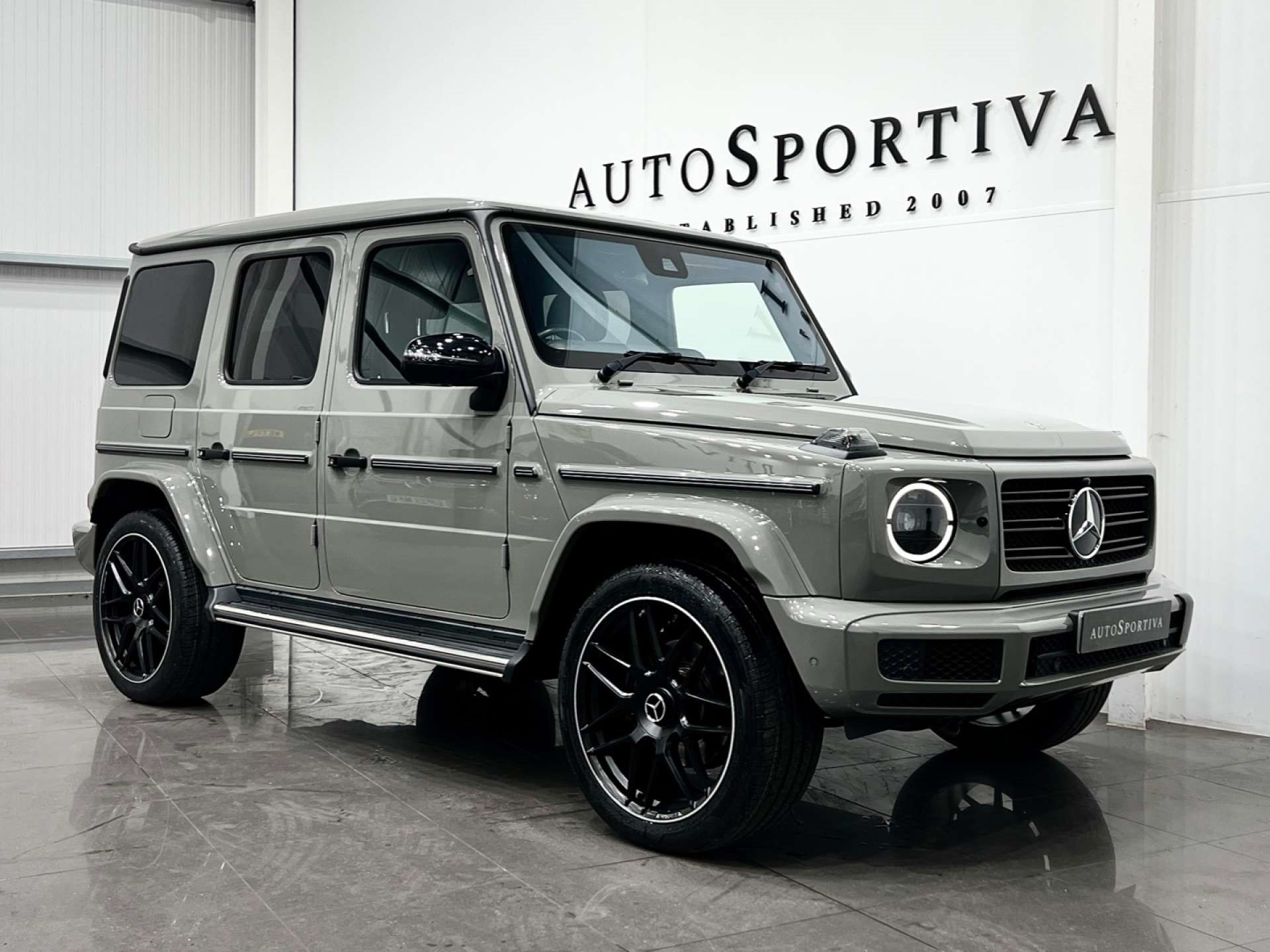
If you like the sound of a Mercedes-Benz then you’re in luck as there are plenty to check out on the Auto Sportiva website today. This old-school-looking G400 brings the classic looks of the famous G-Wagen but with a high-tech interior and a wraparound display. A smooth-running diesel engine makes this particular G400 a great long-distance car, too.
If you want practicality but a lot of performance then this GLE53 could be for you. It’s just as spacious and comfortable as the standard GLE, but with a 3.0-litre turbocharged straight-six petrol engine under the bonnet, it can give a hot-hatch a run for its money.
But if it’s outright luxury that you’re looking for then this long-wheelbase S-Class is bound to be of interest. Though its 2.9-litre turbocharged diesel engine might make this elegant Mercedes a joy to drive, it’s in the back seats where the S-Class comes into its own. Here, you’ll find First Class-levels of legroom while separate controls for the rear seats ensure it’s a breeze to get comfortable when you’re on the move.
The Mercedes-Benz range is varied and, as a result, has something for everyone. If you’d like to check out our extensive line-up of Mercedes vehicles then head over to the website today or, if you’d like an answer to a question, get in touch with a member of the team via our ‘contact us’ page.
